From Risk to Resilience: Advancing Equitable, Cross-Cutting, Nature-Based Solutions in Texas
- Arsum Pathak and Amanda Fuller
- Oct 13, 2026
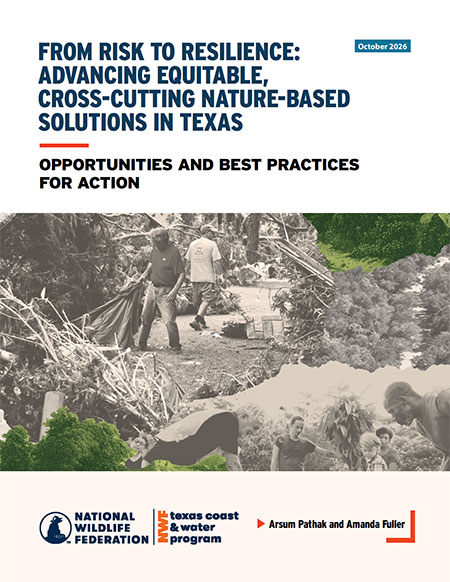
Texas is growing fast, and so are the risks it faces. The state leads the nation in billion-dollar disasters, and intensifying floods, hurricanes, drought, and extreme heat are placing growing strain on communities, water supplies, and infrastructure. Nature-based solutions, such as living shorelines, restored wetlands and floodplains, and prairies, can buffer communities from these hazards while delivering many benefits at once: cleaner water, cooler neighborhoods, healthier wildlife habitat, places to play and gather, and local jobs.
From Risk to Resilience is a practical guide for practitioners, policymakers, funders, and community leaders working to advance nature-based solutions. Drawing on research and case studies from all across the state and country, the report shows how to make these projects fair and inclusive at every stage: giving affected communities a real voice in decisions, directing resources to the places that need them most, and honoring local knowledge, history, and culture. While focused on Texas, its lessons apply to communities nationwide.
A STATE OF RISK AND OPPORTUNITY
- 190 billion-dollar disasters. Texas experienced 190 billion-dollar weather and climate disasters between 1980 and early 2025, with costs exceeding $300 billion.
- $18–22 billion from a single flood. The July 2025 Hill Country flooding caused tragic loss of life and an estimated $18 to $22 billion in total economic loss.
- A powerful natural toolkit. Texas's ten ecoregions, 62.4 million acres of forest, roughly 3.9 million acres of wetlands, and 3,300 miles of shoreline position the state to lead the nation on nature-based solutions.
- Solutions that are already paying off. Along Galveston Bay, more than 22 miles of shoreline have been restored using natural methods. Living shorelines cost about one-third as much as concrete bulkheads, and every dollar spent on wetland restoration yields an estimated seven dollars in flood protection.
OPPORTUNITIES AND BEST PRACTICES FOR ACTION
- Why equity matters: Projects that acknowledge past harms, respect cultural heritage, pay community members for their expertise, and strengthen local organizations are more likely to earn trust, win support, and deliver lasting results.
- A roadmap for implementation: The report lays out seven practical steps, from understanding a community's history and sharing decision-making to distributing benefits fairly, reforming policies, and tracking who actually benefits over time.
- Navigating the Texas landscape: Texas voters approved a $1 billion fund for state parks and conservation in 2023, and the state's flood infrastructure funding now explicitly supports natural solutions. The report summarizes key state grant programs and recommends how state and local governments can prioritize, simplify, and reward nature-based approaches.
How these solutions are planned matters as much as where they are built. Without careful attention to equity, well-intentioned projects can repeat past injustices, push longtime residents out as property values rise ("green gentrification"), or deliver benefits unevenly, often leaving behind the communities facing the greatest environmental burdens. These lessons from Texas reach well beyond the state. As communities across the country face growing climate risks, this report shows how nature-based solutions can do more than protect against disasters: designed with and for local residents, they can help right past wrongs and ensure that everyone shares in a safer, healthier future.
Cover Illustration: Kathia Ramirez
From Risk to Resilience: Advancing Equitable, Cross-Cutting, Nature-Based Solutions in Texas


