Recovering America's Wildlife: Unleashing State & Tribal Conservation Solutions
- National Wildlife Federation, American Fisheries Society, Native American Fish and Wildlife Society, The Wildlife Society
- Apr 22, 2026
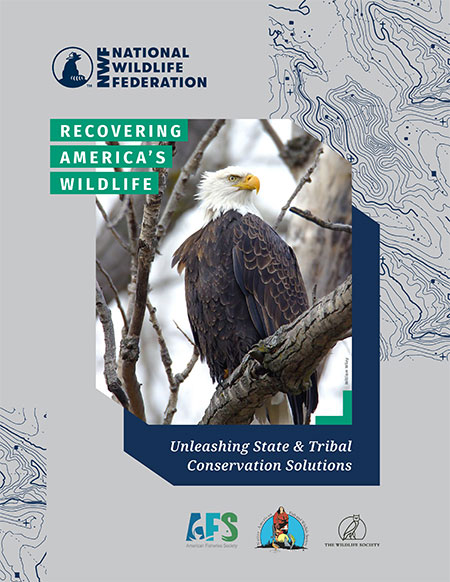
This report describes the role of State and Tribal Wildlife Grants in enabling on-the-ground collaborative conservation and planning to protect and recover America’s extraordinary diversity of fish, wildlife, and plant species. In the U.S., state and Tribal wildlife agencies have developed the tools needed to conserve species before they require the emergency protections of the Endangered Species Act. The State and Tribal Wildlife Grants program, along with hunting and fishing licenses and associated excise taxes, have provided much needed to funding to enact proven conservation solutions, but to date the funding levels have not matched the scale of the need.
The Recovering America’s Wildlife Act is a bipartisan solution to the need for increased funding for state and Tribal conservation. This once-in-a-generation opportunity to invest in the future of America’s wildlife will help prevent extinctions and ensure that science-based conservation can be implemented by states and Tribes. Tribes, in particular, have had less access to conservation funding, despite proven success in recovering species when adequate resources were made available. Research increasingly affirms the fact that when we provide focused, sufficient investment in conservation, we can turn the tide for species in decline-even those on the brink of extinction. Passage of the Recovering America’s Wildlife Act will mark a historic turn in America’s conservation legacy, reflecting our country’s willingness to prioritize the species and ecosystems that have long underpinned our communities, economies, and the nation.
Recovering America's Wildlife: Unleashing State & Tribal Conservation Solutions


