A Looming Crisis for 40 Million People
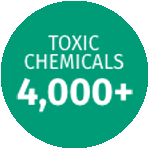
PFAS (Per-and-Polyfluoroalkyl Substances) are a class of over 4,000 toxic “forever chemicals” that pose a severe threat to the health of the Great Lakes, their wildlife, and the communities that depend on them.
What are PFAS "Forever Chemicals"?
PFAS are human-made chemicals that have been used for decades in to make many products:

Waterproof and stain-resistant
Clothing, furniture, carpets

Non-Stick
Cookware

Fire-resistant
Firefighting foam
They are called forever chemicals because they do not break down in the environment. They are persistent, bioaccumulative (building up in higher concentrations up the food web), and toxic.
The Threat to the Great Lakes Region
The Great Lakes hold 21% of the world’s surface freshwater, providing drinking water for 40 million people and critical habitat for countless species. PFAS contamination jeopardizes the entire ecosystem.
Human Health Risks: Exposure to certain PFAS is linked to cancer, thyroid diseases, and other serious health issues.
Wildlife Impacts: PFAS causes depleted breeding success in fish, birds, and mammals, disrupting the entire food web.
Widespread Contamination: These chemicals have been found in water, soil, fish, and wildlife throughout the region.
Our Work
Confronting the PFAS Crisis
The National Wildlife Federation’s Great Lakes Regional Center is on the front lines of this fight. We are working to protect public health, fish, wildlife, and the regional economy from PFAS contamination.
Our Two-Pronged Approach

Amplifying Community Voices
We believe that those impacted by contamination must lead the conversation. Through the Great Lakes PFAS Action Network, we center the voices of community leaders to demand accountability and action.

Driving Science-Based Policy Solutions
We are working at all levels of government to ensure decision-makers implement strong policies to clean up existing contamination and prevent future pollution.
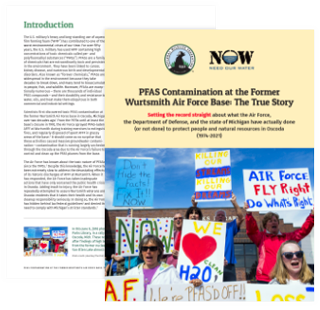
Case Study
Oscoda Michigan & Wurtsmith Air Force Base
The community of Oscoda, Michigan is a tragic example of the PFAS crisis. Contamination from the former Wurtsmith Air Force Base has polluted local water, harmed residents, and degraded high-value wildlife habitat, including the world-famous Au Sable River fishery.
You Can Help Protect the Great Lakes
The threats of PFAS are vast, but together we can demand solutions.
For More Information Contact:

Cathy Martin
Great Lakes Senior Drinking Water Policy Coordinator
MartinC@nwf.org


