Editor's Note: Fall 2025
National Wildlife magazine’s editor shares thoughts on tackling tough stories, including planned burns in a year beset by fire
- By Jennifer Wehunt
- NWF News
- Sep 24, 2025
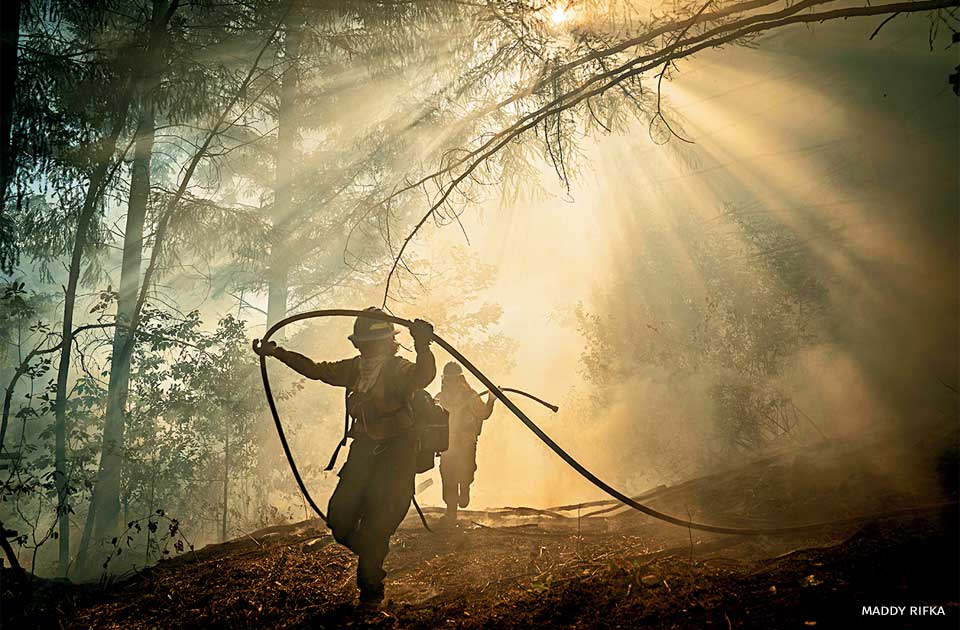
Members of the Cultural Fire Management Council conduct a burn in Weitchpec, California.
WRITING ABOUT FIRE in a year that began with tragedy and devastation in Los Angeles and has continued with destructive blazes burning from rural California to Florida requires extreme sensitivity. We aim to walk that line in “Good Fire: The Case for Cultural and Prescribed Burns,” by reporter Kate Gonzales. No fire, not even a meticulously orchestrated one, is without peril, but as source after source told Gonzales, in some circumstances, planned burns can help prevent out-of-control devastation to people, wildlife and entire ecosystems.
In putting this issue together, we visited a number of other at-risk landscapes. Brianna Randall talked to a bevy of experts to understand what approaches are most effective now in protecting the depleted but pivotal sagebrush biome. Katarina Zimmer reported on relocating plants and animals in response to sea level rise. And our assistant editor, Delaney McPherson, chased down updates for “40-Plus States Submit Wildlife Action Plans This Fall. Here's What That Means,” on state blueprints for vulnerable wildlife species. Every stabilized population of river otter or sage-grouse and every safely completed prescribed burn marks another conservation success. And as Lenya Quinn-Davidson, director of the University of California’s Fire Network, told Gonzales, “we need as many of those as we can get.”
Jennifer Wehunt is the editorial director of National Wildlife magazine. Share your thoughts on the magazine by emailing nwfeditor@nwf.org.


