Why Is Nature Good for Us?
We know that nature benefits us. Scientists are trying to understand how.
- By Katarina Zimmer
- Conservation
- Jun 24, 2026
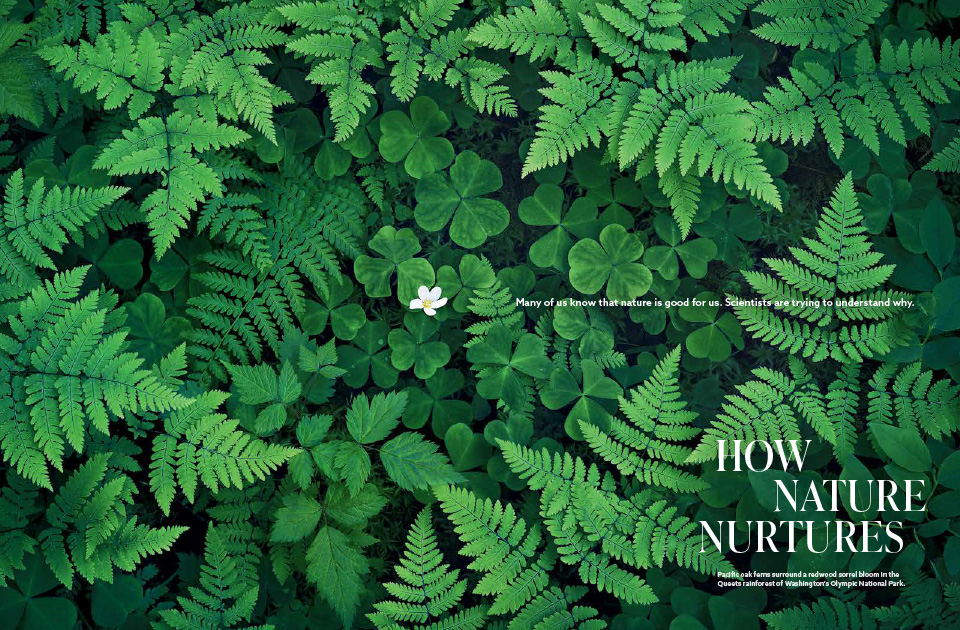
Pacific oak ferns surround a redwood sorrel bloom in the Queets rainforest of Washington’s Olympic National Park. (Photo by Alex Noriega)
NOT EVERY SCIENCE EXPERIMENT is a walk in the park. But for 32 people who took part in neuroscientist Sonja Sudimac and her colleagues’ study in Berlin’s Grunewald Forest, it came very close. After spending an hour strolling along a path leading through the trees, participants were picked up by a taxi and rushed to the researchers’ nearby lab at the Max Planck Institute for Human Development. There, each person lay down in a functional magnetic resonance imaging (fMRI) machine that would analyze their brain activity. The scientists wanted to know: Had the nature walk affected the participants’ brains?
Specifically, they were interested in a part of the brain, called the amygdala, that processes fear or stress and triggers the body’s fight-or-flight response. Inside the scanner, participants were shown images of scared human faces—a test designed to provoke activity in their amygdalae. Remarkably, participants’ amygdalae were much less reactive after the forest walk than during tests conducted beforehand. By contrast, another group of 31 participants who had walked along a busy street showed no difference in their amygdala activity before and after the walk. Evidently, the forest made people less prone to stress, the researchers concluded in a 2022 report in Molecular Psychiatry. In fact, “this nature walk may have built resilience,” Sudimac says.
It’s common wisdom that nature boosts our health. And since the 1980s, numerous scientific studies have affirmed that people who spend more time in natural spaces feel more upbeat, relaxed and calm, as well as less stressed, anxious and depressed. These benefits aren’t imagined: Scientists have found that being in nature has measurable effects on our brains and reduces blood pressure, heart rate and blood levels of the stress-triggering hormone cortisol.
Aware of such health benefits, cultures in Japan and South Korea have rich traditions of forest bathing, a kind of intentional relaxation done while immersing oneself in nature. In North America, many Indigenous Peoples long have recognized that, “in order for you to be holistically healthy, you have to have a balance in your life with your environment … and that contributes to your mental, physical and spiritual well-being,” says Navajo Nation member Gloria Tom, a senior strategic and special policy advisor for the National Wildlife Federation who works with its Tribal Advisory Council.
But why is nature so good for us? Certainly, the fresh air and exercise we get outdoors explain part of it—but research shows that people experience similar benefits when they’re viewing imagery of nature or even just imagining it. In recent years, scientists increasingly have posited a range of ways in which the sights and sounds of nature act on us—from triggering deeply rooted feelings of safety to restoring overloaded attention spans to boosting creativity and immune health.
While many questions—and debate—around these effects remain, the research reveals some of the numerous and varied benefits nature provides at a time when many of us need it. From worrying about financial insecurity to the next generation’s future, “a lot of the stressors in our modern society are just the worst kind: They’re unresolvable, they’re uncontrollable, they’re chronic,” says Kendra Wilson, a social psychologist at The Ohio State University. “I think nature psychologically … can undo those feelings of chronic stress that tend to be the most harmful on health.”


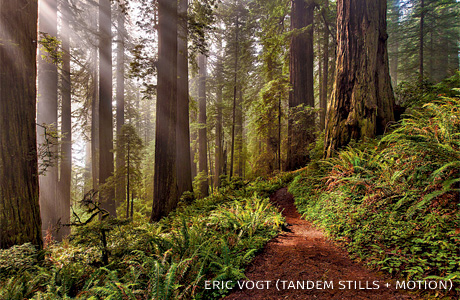
In one experiment, participants who walked through a forest (California redwoods, above) exhibited reduced reactivity of the amygdala, a brain area that generates fear and stress. Participants in the same experiment who walked along a city street (San Francisco, pictured) did not benefit from the same fear- and stress-reducing effects as had the forest group.
Instinctive or learned love of nature?
In 1984, the noted biologist and naturalist Edward O. Wilson proposed one of the earliest theories for why nature is good for us: Because our ancestors depended on nature to survive, humans evolved to be drawn to the natural world. Each of us is born with this “biophilic” tendency, Wilson argued.
Evolutionary explanations for our attraction to nature remain popular: In one 2024 paper in People and Nature, ecologist Yūya Fukano of Japan’s Chiba University and Masashi Soga of the University of Tokyo posit that early humans exposed to cycles of drought and wet weather evolved to have a positive response to the color green, ensuring they’d be drawn to the lush vegetation that signals the water, shade and wildlife needed for survival.
But while many people indeed are drawn instinctively to nature, the idea that we evolved this response is controversial. For one, it’s very hard to prove. It’s also simplistic, says environmental psychologist Terry Hartig of Sweden’s Uppsala University. After all, many of us thrive in cities, and for early humans, life in nature was often a dangerous fight for survival.
Today, many scientists look instead to the “stress reduction theory”—proposed by the health scientist Roger Ulrich in 1991—to explain some of nature’s health-boosting effects. It stipulates that, while humans have an inborn tendency to respond positively to natural settings—such as feeling soothed and relaxed—their response is shaped by their culture and individual experiences in nature. Many unthreatening natural environments that we can safely explore and contemplate, whether forests or seashores, please and relax us. This could be partly why research has shown that nature lowers our heart rate, blood pressure, cortisol and the reactivity of our amygdalae, making us better at handling stress-provoking situations. Reduced stress, in turn, lowers the risk of stress-triggered diseases and mental health problems.
According to the psychologists Rachel and Stephen Kaplan, who conceived the “attention restoration theory” in the 1980s, nature also gives our overloaded brains a break. Much of the time, our brains are busy concentrating, planning and executing tasks, they explain, which makes us cognitively tired and unfocused, triggering stress and anxiety. “If we’re in that state over time, then that’s going to negatively impact our health and well-being,” notes environmental psychologist Melissa Marselle of the University of Surrey in England. Nature provides relief by captivating our attention in soft, gentle ways. Think of leaves glistening in the sunlight or the sound of trickling water, she says. “That’s inherently fascinating. It attracts our attention without any cognitive effort.”
Some scientists believe this kind of “soft fascination” can affect pain perception. In a 2025 study published in Nature Communications, the environmental psychologist Mathew White of the University of Vienna had 49 study participants lie in an fMRI scanner and watch imagery of a greenery-surrounded lake, a city or an office desk while they received mild electric shocks. Remarkably, people reported the pain to be less severe when watching and listening to the natural scene. They were so captivated, White suspects, “that they weren’t aware of the pain, basically, to the same level.”
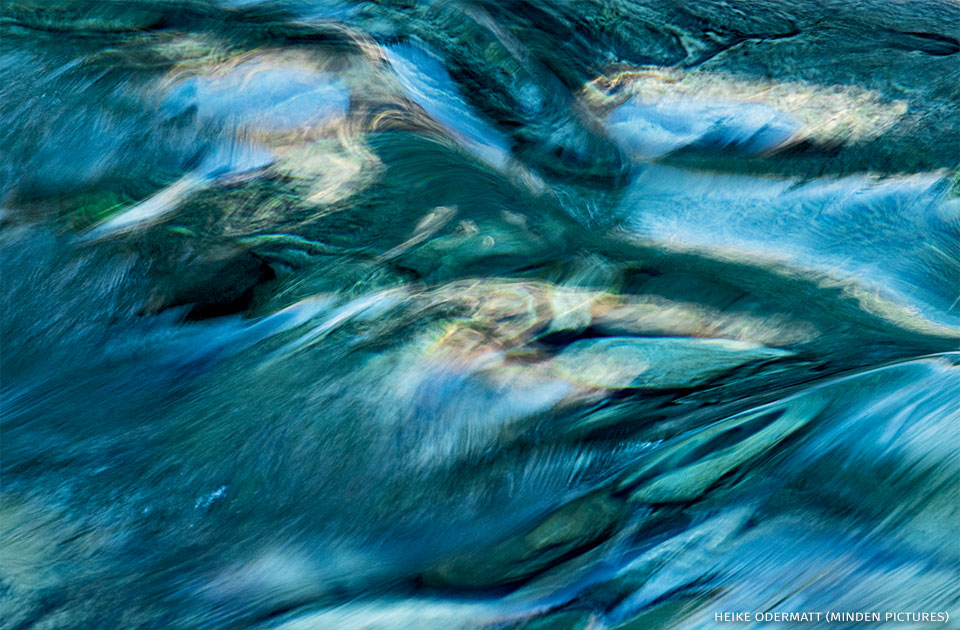
Some scientists say nature benefits us by providing “soft fascination” (with flowing water, pictured, for example) that gives our busy brains a break from always planning and executing tasks.
From creativity to immunity
Nature doesn’t only help us when we’re stressed, overwhelmed or in pain. Sometimes it’s just a bonus. Environmental psychologist Kathryn Williams of the University of Melbourne in Australia has been studying how nature can foster creativity. By giving our minds a dose of soft fascination—and importantly, allowing them to wander—nature can trigger flowing thought patterns that create new ideas and spark new connections between existing ones. “It’s kind of loosey-goosey. It’s lovely,” Williams says.
Other researchers have linked nature exposure to greater satisfaction with one’s social life—not just because we’re often outdoors with other people but also because it puts us in a better mood when we later spend time with family and friends, Hartig suspects. And in one 2025 study in Health & Place that surveyed 812 university students in Canada, those who felt connected to the natural world reported feeling less lonely in nature even when they were outdoors by themselves. Perhaps nature itself gives people a sense of belonging and comfort, Hartig suggests. “They may want to go out to engage with the natural world or features of it—perhaps animal life, perhaps certain trees or plants—that almost take on this quality of a social partner.”
Even our immune systems may get a boost from exposure to the natural world. In one 2024 study of 1,244 U.S. adults, published in Brain, Behavior, and Immunity, individuals who spent more time in nature had lower blood concentrations of a molecule called C-reactive protein, a sign of inflammation that can give rise to chronic diseases, stress and mental health issues.
One possible reason, Wilson speculates, is that natural environments expose us to beneficial bacteria that contribute to healthy microbe communities in our guts and on our skin, which can dampen inflammation.
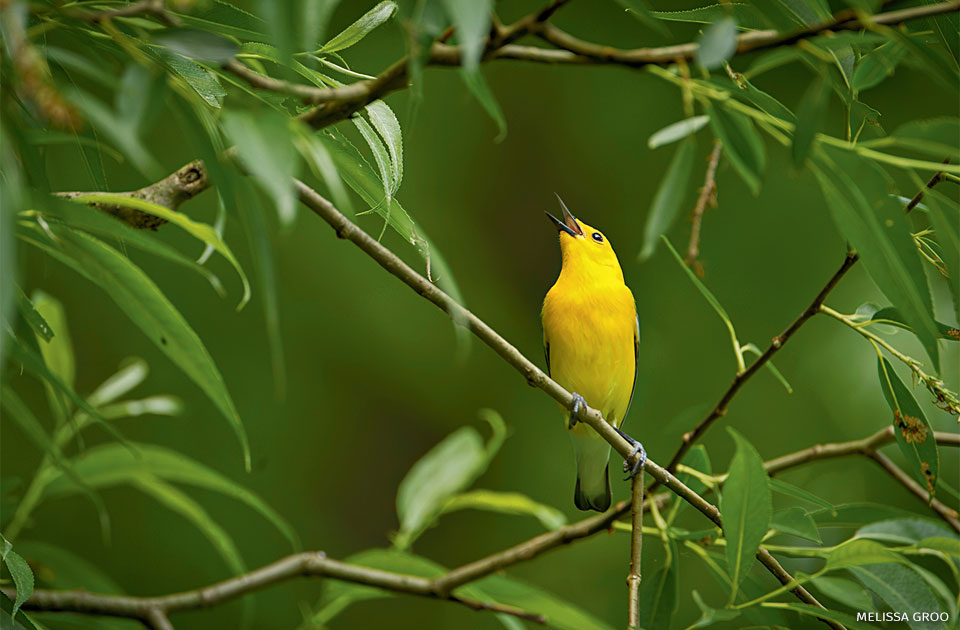
A person’s positive emotional response to birdsong (prothonotary warbler, pictured) may be enhanced if they know the bird species or if its song evokes pleasant childhood memories.
Prescribing the outdoors
Of course, everyone experiences nature differently. Although many people seem to prefer “green” ecosystems like forests over deserts, for example, a 2022 study in the Journal of Environmental Psychology found that desert-accustomed residents of El Paso, Texas, experience significant decreases in cortisol when seeing pictures of deserts. And while people from relatively wealthy Western cultures have a long-standing habit of going outdoors for recreation, communities that use ecosystems for income or sustenance may experience nature another way. Because research shows that feeling safe in the natural world is one of the strongest predictors of health benefits, many people may get bigger health boosts from manicured environments like parks than from wild areas that could be perceived as dangerous, White says.
Research on the benefits of nature underscores the need not only to protect wild places but also to bring more nature into cities in the form of parks, community gardens and additional greenery in general. Ideally, nature “should just be part of regular life,” like exercise or getting enough sleep, says Nooshin Razani, a pediatrician and researcher at the University of California, San Francisco. Yet many neighborhoods—especially marginalized communities that particularly could benefit from nature—don’t have access to green spaces. In an analysis of nearly 50,000 children and teenagers across the United States, published in 2020 in Preventive Medicine, Razani found that nearly a quarter lived in neighborhoods that lacked parks; that was especially the case for those from non-white families or who had lower incomes.
Razani hopes that park prescriptions—programs in most U.S. states will allow physicians to connect their patients to nature through partnerships with parks—can address this gap. In Oakland, California, she and her colleagues organize monthly bus outings for families, often from low-income and marginalized communities who otherwise might have limited access to parks. “We go into nature and we just have a ton of fun,” she says. Nonprofit organizations, including NWF, also have programs encouraging children to spend more time outdoors. (See “NWF priority,” below.)
Childhood experiences in nature are especially important, says White. He suspects one reason why nature is beneficial is because it rekindles positive memories. A person’s emotional response to birdsong, for instance, depends not just on the song but also on the memories they associate with it, such as hearing the bird at their grandma’s house as a child, says environmental psychologist Eleanor Ratcliffe of the University of Surrey.
Other research suggests that someone’s perceptions of nature, and how connected they feel to it, determines how much they benefit. Recent research by a team that included Marselle and Ratcliffe shows that even people who believe there are more species around them—including when it’s not true—get a greater well-being boost than those who think they’re in less biodiverse environments. The more people appreciate the species around them, the scientists say, the more nature will benefit their health.
Sudimac says such findings are more important than ever today, when more than half the world’s population lives in cities, a proportion expected to rise to nearly 70 percent by 2050. That trend, along with increasingly indoor, on-screen lifestyles and unequal access to nature, may be contributing to the rise of mental health problems like anxiety and depression, which are more common in urban places, she adds.
Thanks to research by her and others, we now know that protecting and expanding the nature around us is just as much of a priority for human health as it is for conservation. If we nurture nature, nature can help us heal, too.
NWF Priority
Taking a “Green Hour”
As studies increasingly demonstrate the mental and physical health benefits of being outdoors—especially for children—more and more of our kids are spending the bulk of their time indoors, much of it in front of electronic screens. To encourage more children to get outside in nature, the National Wildlife Federation’s Green Hour® provides tips and activities for kids, their families and other caregivers, asking them to adopt a goal of at least one hour a day of time for children to play and learn outdoors in nature.
Katarina Zimmer is a science and environmental journalist who is based in Berlin.
More from National Wildlife magazine and the National Wildlife Federation:
To Heal Our Nation, ‘Touch Grass’ »
People are happier when they spend time with a diversity of bird species »
For Healthier Little Kids, ECHO Takes Playtime Outdoors »
Blog: Wildlife Gardening Can Provide Mental Health Benefits, Too! »


