Can the Grand Canyon Remain a Native Fish Haven?
The Colorado River within Grand Canyon National Park is known for protecting native fish from predatory invasives. Scientists hope that isn’t doomed to change.
- Text and photos by David Herasimtschuk
- Conservation
- Jun 24, 2026
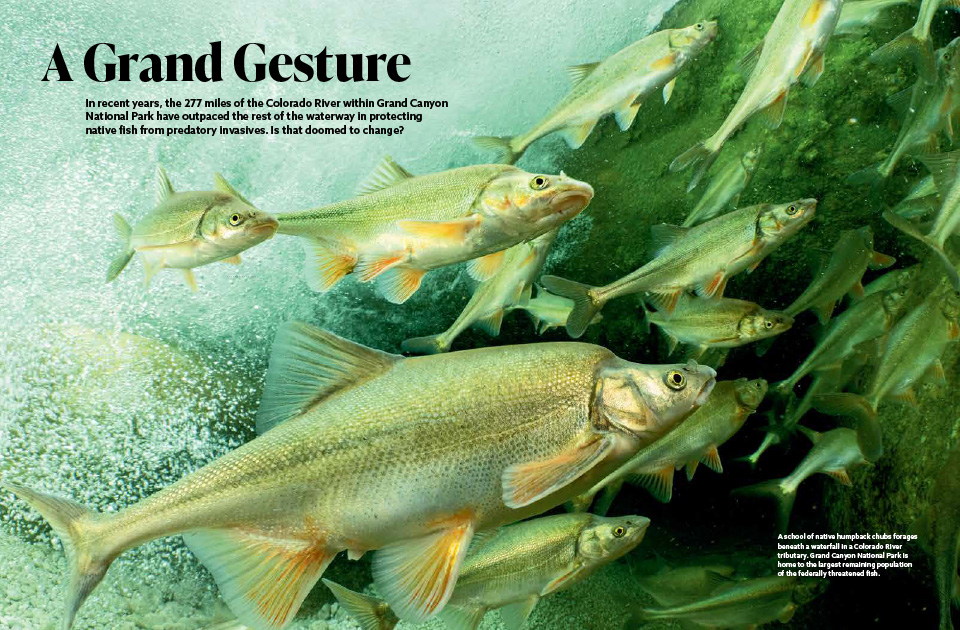
A school of native humpback chubs forages beneath a waterfall in a Colorado River tributary. Grand Canyon National Park is home to the largest remaining population of the federally threatened fish.
FEW RIVERS WORK AS HARD as the 1,450-mile Colorado. Winding through seven states and Mexico, the river basin supplies water to 40 million people. It’s referred to as a resource, a lifeline, a marvel—and that’s before we break the surface. Within the same waters that carved the Grand Canyon, a unique and oddly beautiful assemblage of native fish has persisted against harsh odds.
But with pressures mounting, from large-scale water management to climate change to invasive species, the future of that underwater biodiversity is in doubt. Today, for example, the native humpback chub is considered functionally extirpated along certain sections of the river and is listed as federally threatened wherever it is found.
There has been cause for hope. To date, the 277 miles of the Colorado within Grand Canyon National Park has remained a bastion for native fish. Thanks to research, monitoring and invasive targeting, among other factors, the chub has surged from about 4,000 individuals in 2000 to perhaps more than 100,000 in 2025 in the western part of the park.
To understand how populations are faring, park biologists and partners tag and release native fish. “About 95 percent of the fish we and others capture are now native, with only 5 percent nonnative,” says Emily Omana, a fisheries biologist with the park. “That’s a remarkable reversal from the 1980s to 2000s, when it was almost exactly the opposite.”
The success of Grand Canyon’s native fish populations has been due in part to Glen Canyon Dam, located about 16 miles upriver from the park’s northern border. Since its completion in 1963, the dam has acted as both a structural and a thermal barrier. Continuous cold-water releases from Lake Powell, a reservoir on the north side of the dam, historically kept warm-water invasives like smallmouth bass and sunfish from entering the canyon.
But human use, drought and climate change have cut Lake Powell’s water level by about three-quarters since the late 1990s. The dam now releases warmer water than in summers past, often topping 60 degrees F compared to 45 when the reservoir was full. While warm water supports native fish, it also creates ideal conditions for predatory species kept at bay by colder temperatures. In 2022, invasive smallmouth bass were discovered reproducing below Glen Canyon Dam for the first time, with initial surveys recording more than 360 of the fish. By 2023, the number had surged to over 1,100.
Park biologists now are racing to slow the spread of smallmouth bass and sunfish. As Lake Powell’s water level has dropped and cold water has grown less dependable, scientists have relied on a network of bypass tubes to access deeper, chillier water. That system is relatively fragile, handles a limited volume and doesn’t generate hydropower like regular draws do—which in turn carries financial consequences. All of these considerations raise questions as to whether the cold-water releases can continue.
“Human health and safety, and water supply, are always going to be the first concern,” says Jack Schmidt, director of the Center for Colorado River Studies and former director of the U.S. Geological Survey’s Grand Canyon Monitoring and Research Center. He stresses that the Grand Canyon connects the two largest reservoirs in the nation, and water levels are alarmingly low.
“Lake Powell is in crisis now,” he says. “We’re working off a set of desired outcomes that were developed when Lake Powell was full. That’s not the current reality.” He points to the challenge of managing the river for both water security and ecosystem health. “The warming world of declining runoff is likely to force difficult decisions about what environmental fights are tractable and winnable in the future.”
Omana remains positive: “At the end of the day, we’ve seen incredible success preventing the establishment and distribution of smallmouth bass” in the national park. In both 2024 and 2025, bass numbers dropped from the 2023 peak, and “we’re seeing no more evidence of reproduction,” she says. “Even in the most challenging times, if we work together to use the tools available to us, we can find a way to protect the ecosystems of the Grand Canyon.”
For now, one of the last strongholds for native fish in the Colorado River endures, with the only certainty that the future is uncertain. See more photos in the slideshow below.
Read about photographer David Herasimtschuk.
-
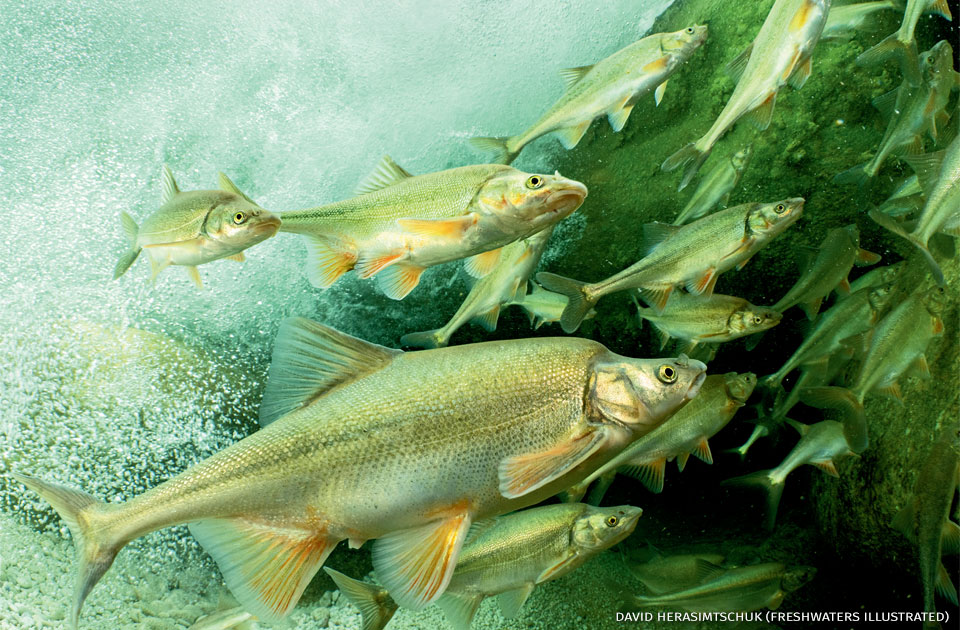
A school of native humpback chubs forages beneath a waterfall in a Colorado River tributary. Grand Canyon National Park is home to the largest remaining population of the federally threatened fish.
-
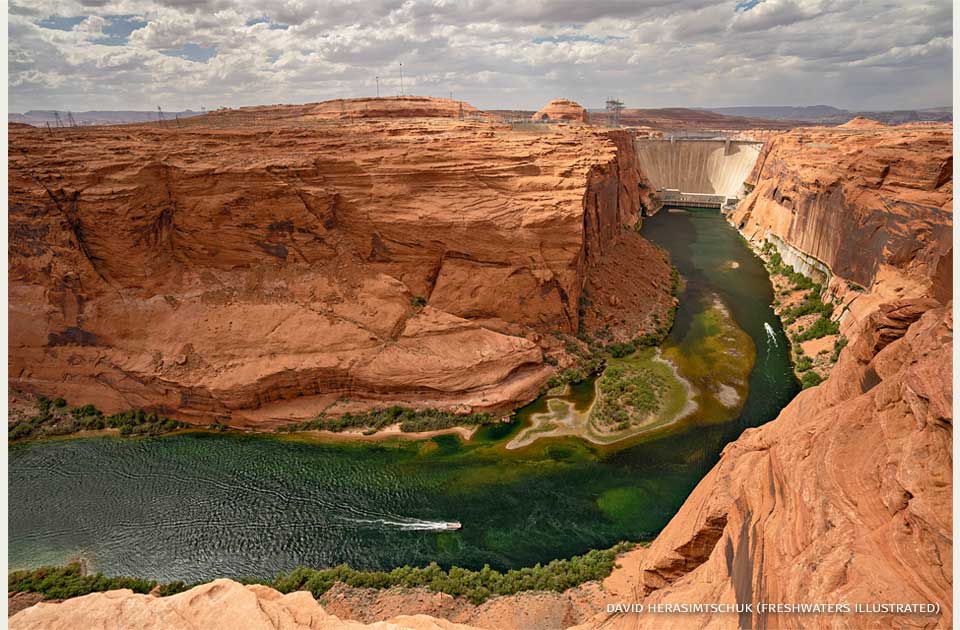
A view of Glen Canyon Dam, from its south side. In 2022, predatory smallmouth bass were found reproducing in this stretch of river for the first time.
-
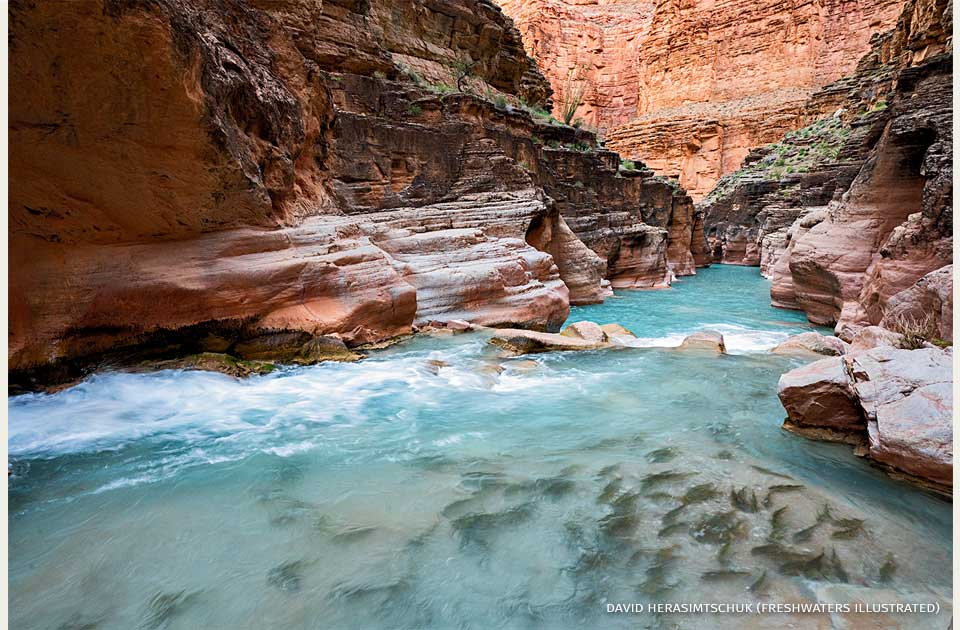
Native flannelmouth suckers make their way up a Grand Canyon tributary to reach their spawning grounds.
-
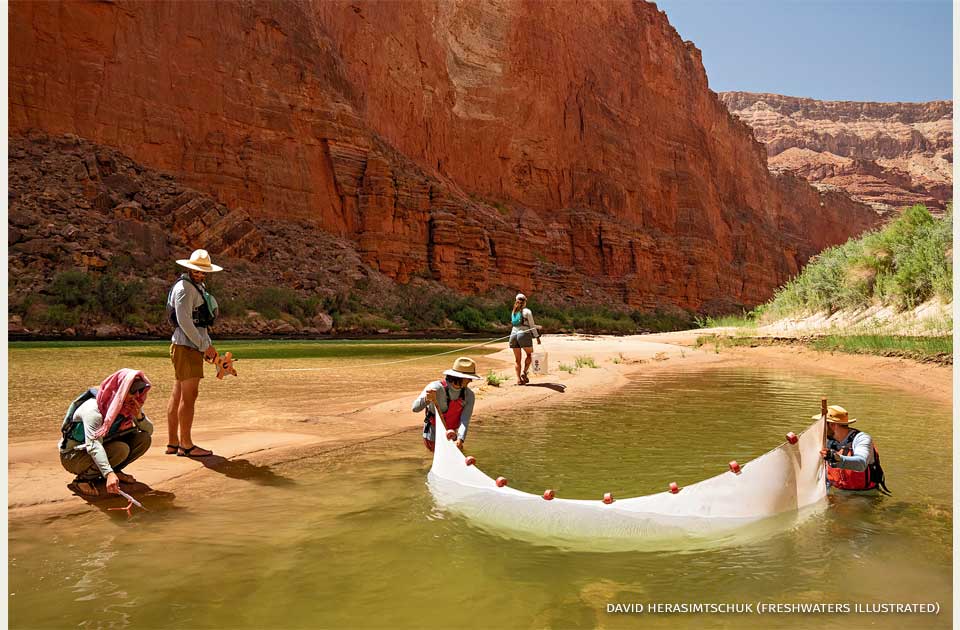
Grand Canyon National Park biologists search a Colorado River backwater for invasive smallmouth bass.
-
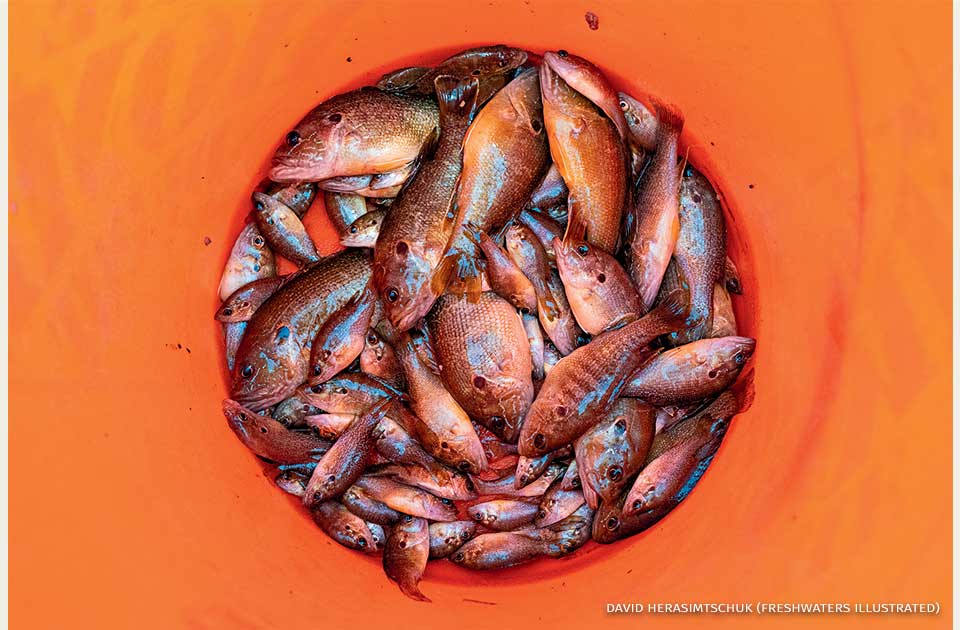
Other removal targets include green sunfish.
-
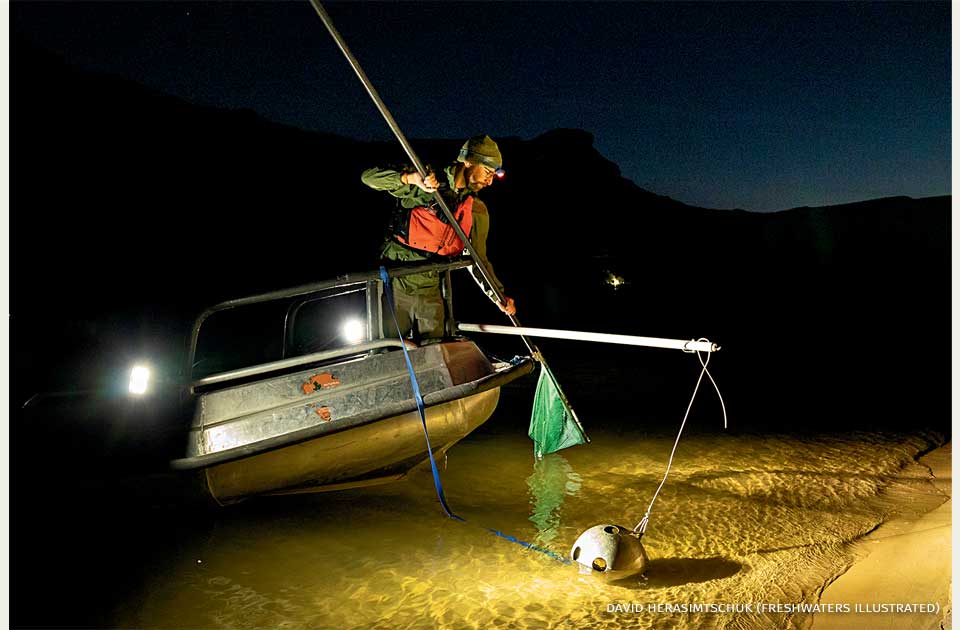
Biologist Kurt Shollenberger uses a method known as electrofishing to catch nonnatives that have made their way into the upper canyon.
-
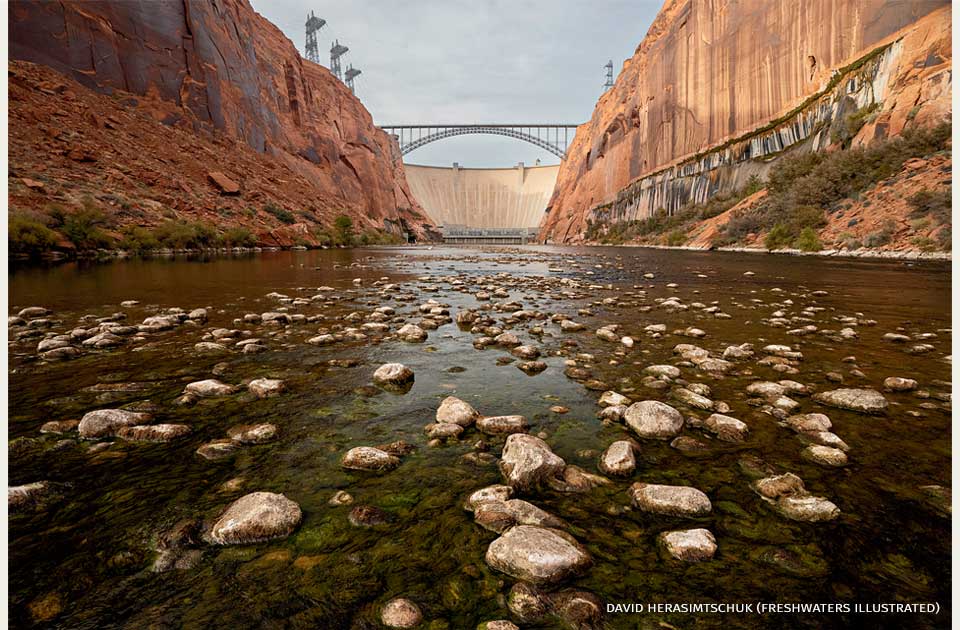
Low water in Lake Powell north of Glen Canyon Dam means less—and warmer—water south of the dam, pictured above, improving odds for invasive species.
-
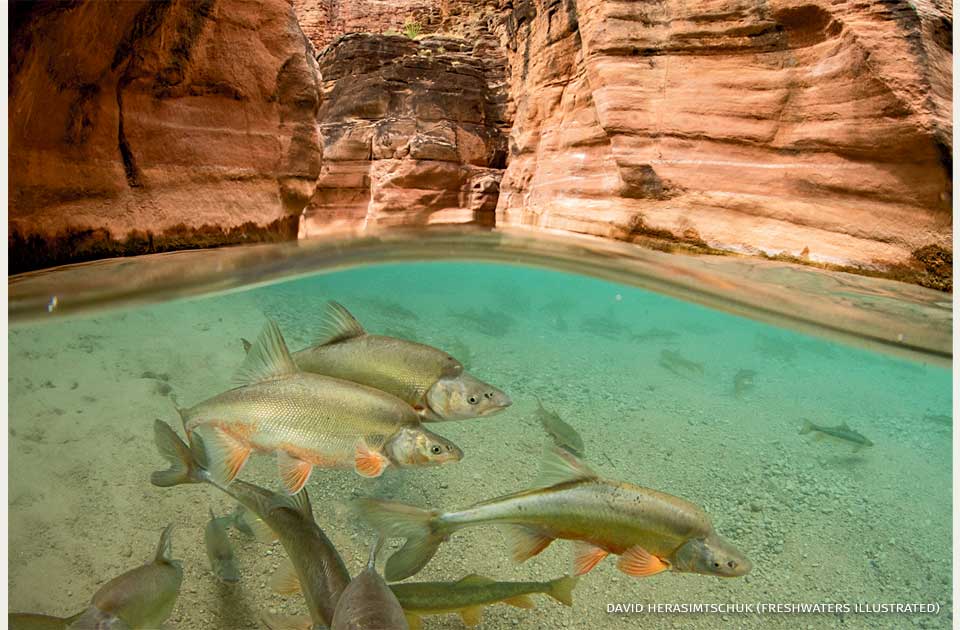
Humpback chubs patrol a Colorado River tributary.
-
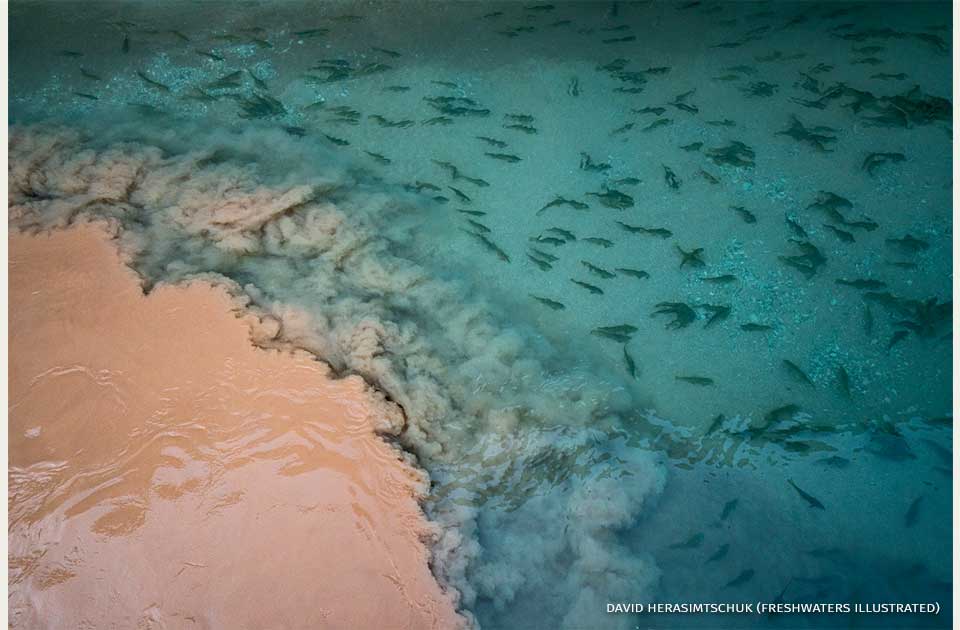
Where the river’s sediment-laden main stem meets clear tributaries creates prime native spawning habitat.


