Plainfin Midshipman: A Face Only a Father Could Love
See photos of the plainfin midshipman—a fish with lots to teach us about paternity and contaminants in the food web, even if it isn’t pretty
- Text and photos by Shane Gross
- Wildlife Photos
- Sep 24, 2025
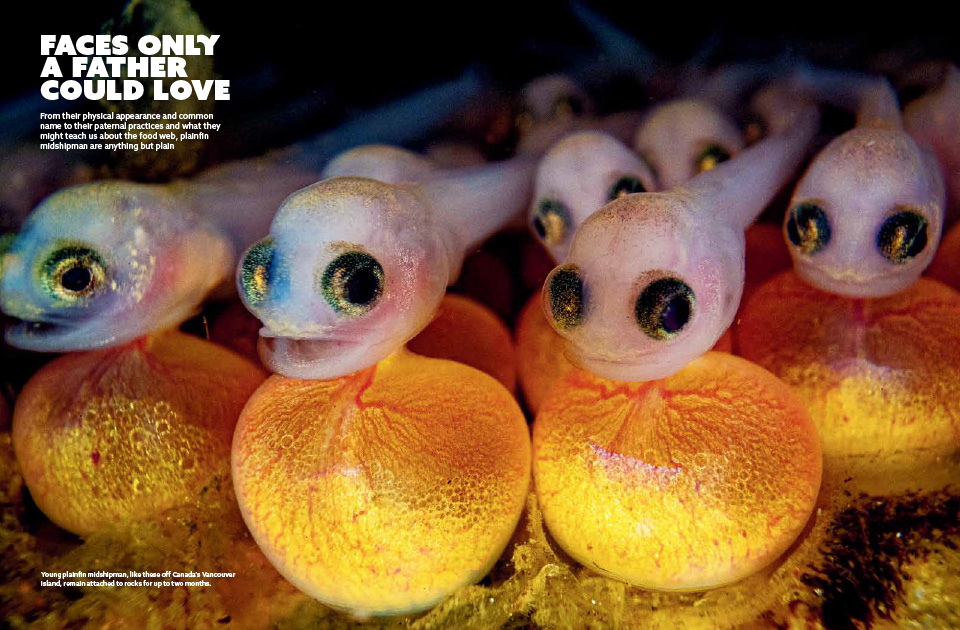
A NOT PARTICULARLY PHOTOGENIC VARIETY OF TOADFISH, the plainfin midshipman may be the most fascinating fish you’ve never heard of. There’s its name, for starters. Its singing. Its parenting practices. And then there’s a whole body of research underway that might make this the first—but likely not the last—time you encounter this remarkable creature.
The plainfin midshipman—singular and plural—gets its name from the bioluminescent photophores, or light-emitting organs, on its belly that resemble the buttons on a naval officer’s uniform. Found in deep water off the Pacific coast from Alaska to Baja California, Mexico, the fish migrate to the intertidal zone when it’s time to breed, usually around year 2 of their 3- to 17-year life span. There in the shallows, males “sing” to attract females by rapidly contracting muscles around their swim bladders, producing a hum. After females lay eggs, they disappear back out to sea, with a subset of males staying to care for the young.
“This period of male care may be one of the longest and most costly of the fish world,” says Sigal Balshine, a behavioral ecologist from Canada’s McMaster University. For several months, these males, known as guarders, eat little and endure long stretches of low oxygen and high temperatures at low tide. While male parental care is more common in fish than in mammals, where females often shoulder sole duty, or birds, where parents share responsibility, “Studying why it’s the male in fishes that typically provides care for the young helps scientists better understand the evolution of parental care more generally across species,” Balshine says.
With other scientists from McMaster, Balshine is also studying how bald eagles and other birds that feed their chicks a diet rich in plainfin midshipman are transferring contaminants, such as mercury, from the ocean’s depths to the terrestrial world. Learning which contaminants and in what amounts will give researchers more insight into how toxicants spread throughout the food web. Expect more to come from this surprising species. See a slideshow of photos below.
Read about Shane Gross.
-
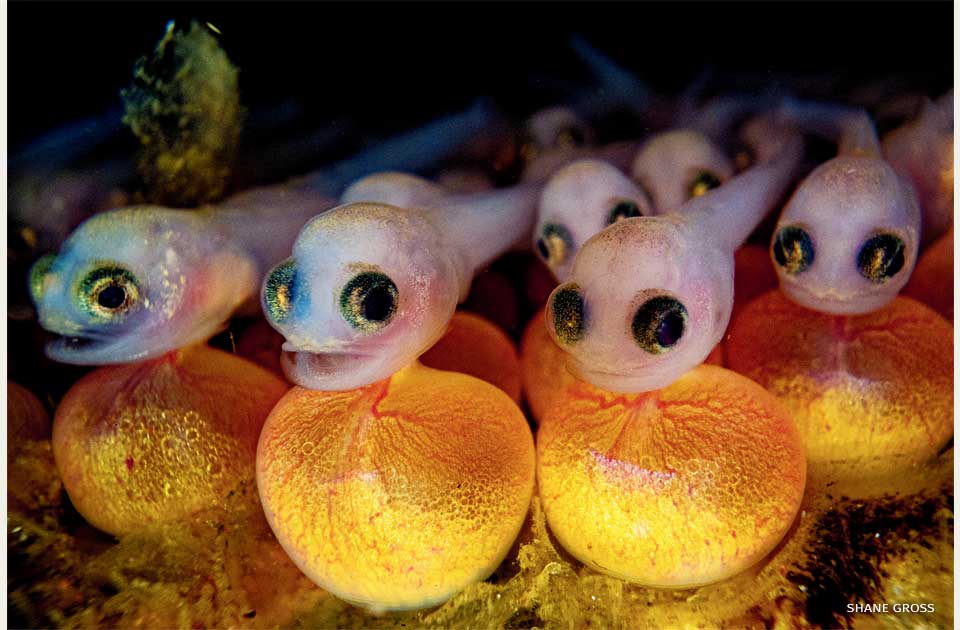
Female plainfin midshipman lay their adhesive eggs on the undersides of rocks in the Pacific Ocean’s intertidal zone—up to 300 eggs per brood. With multiple females depositing eggs in each nest, a single male can fertilize more than 3,000 eggs a year. After eggs hatch, typically about a month later, the young—including these, off Canada’s Vancouver Island—remain attached to the rocks by adhesive discs on their yolk sacs, which feed the fish until they are large enough to break free and begin hunting on their own, usually around 2 months old.
-
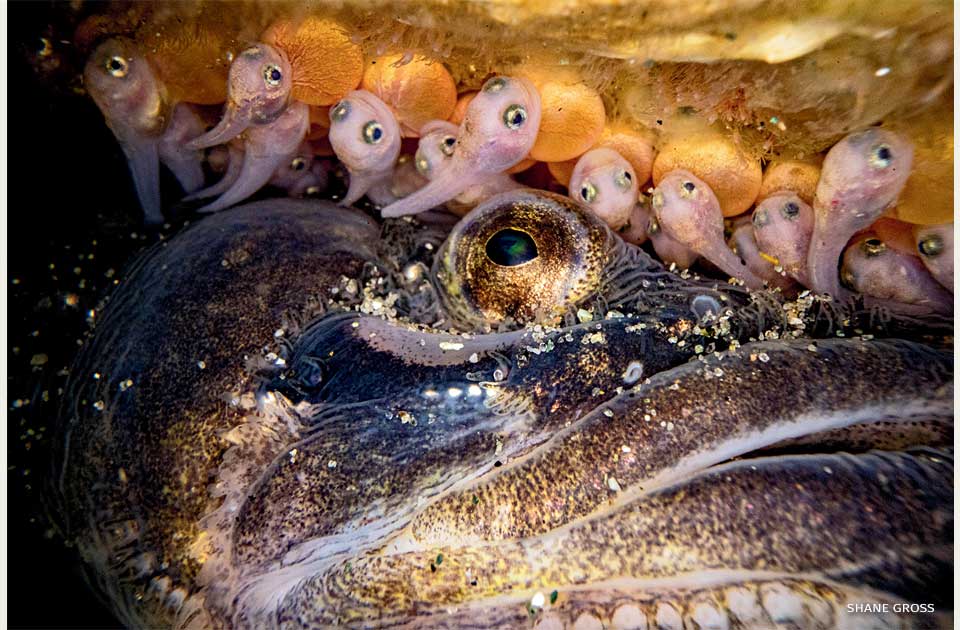
Guarder males such as this one off Canada’s Vancouver Island can grow up to 15 inches in length.
-

Grad student Ainsley Harrison-Weiss (right) holds a plainfin midshipman while research assistants Madeleine Thomson (left) and Tom Zhang (center) inspect a nest as part of a study on how females choose mates.
-
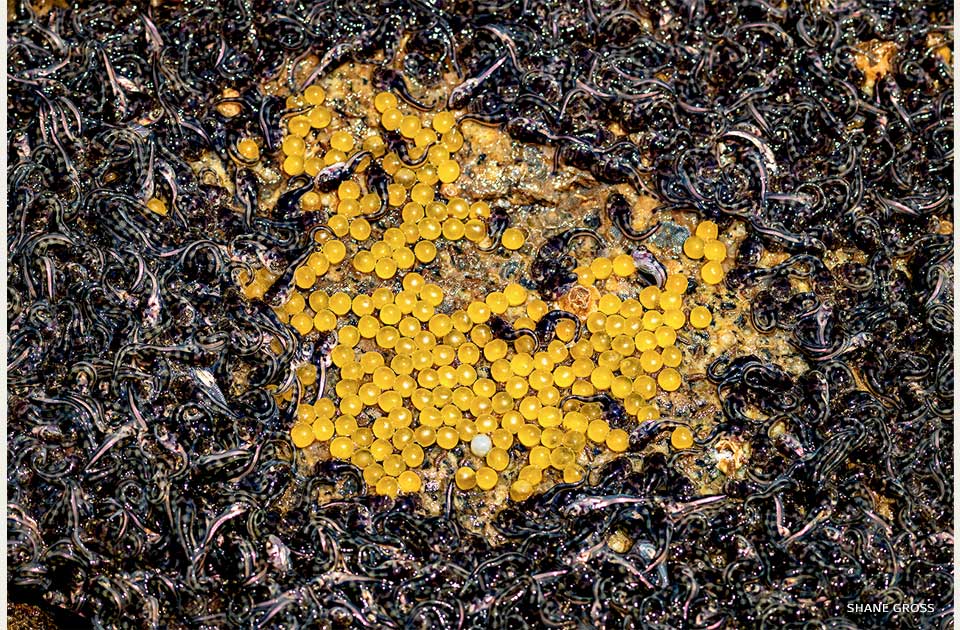
A nest reveals a combination of eggs, newly hatched juveniles and fish nearly ready to fledge, around 60 days old.
-
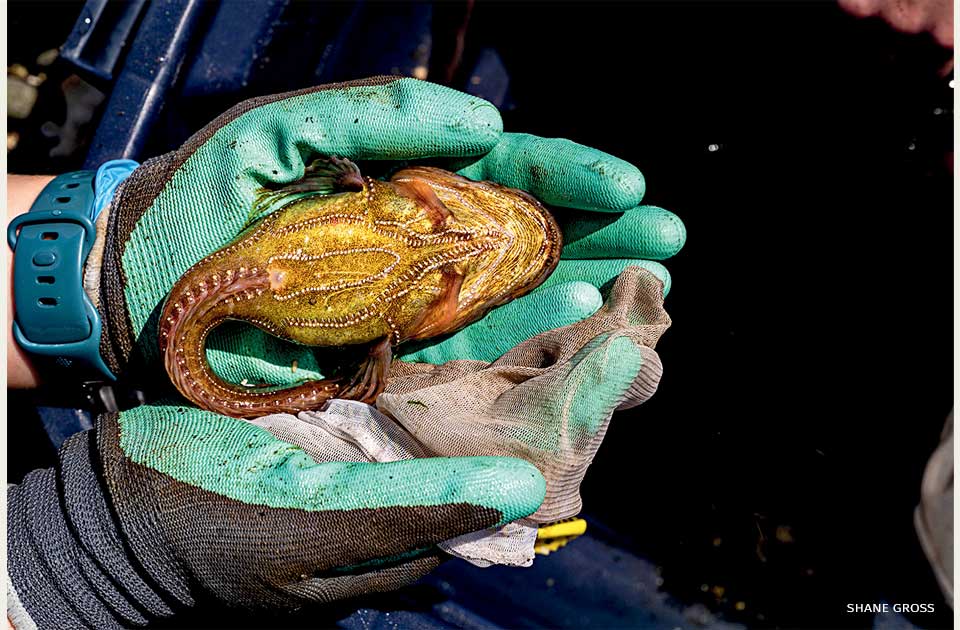
The species, including this 4- to 5-yearold female, has photophores scattered across its body; those on its belly, resembling buttons, earned the fish its common name. By eating a diet of small, light-emitting crustaceans, many plainfin midshipman are bioluminescent.
-
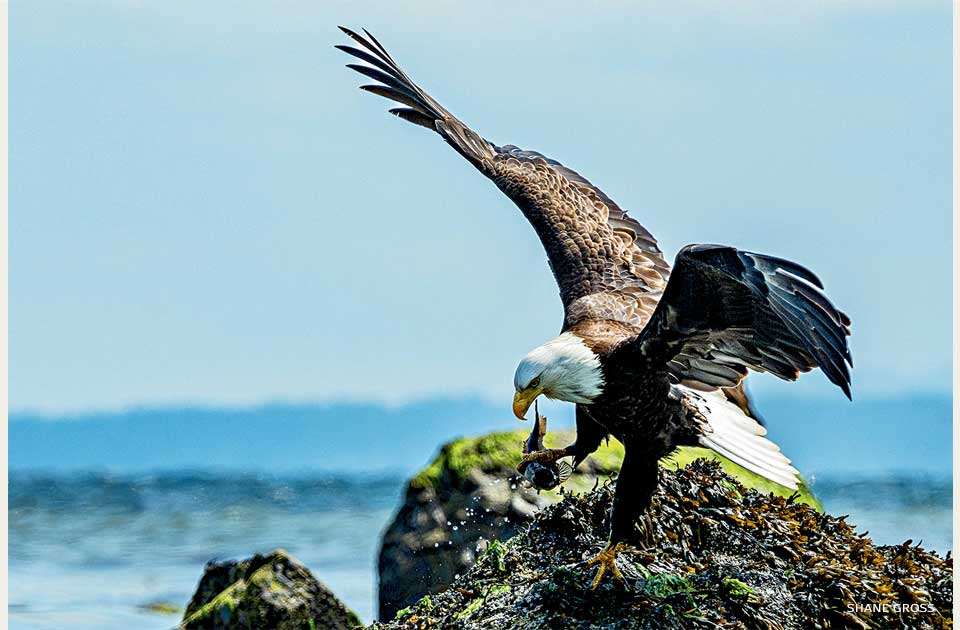
Plainfin midshipman are spawning new areas of inquiry. In a current study, Sigal Balshine and other McMaster scientists hope to learn more about how bald eagles and other birds of prey that eat plainfin midshipman are disseminating contaminants in the food web.
-

With scientists based at McMaster and the University of Victoria, Balshine published a 2024 paper in Marine Pollution Bulletin that found noise from motorboats decreases the number of hums the fish make at dawn and dusk. So far scientists don’t know what impacts noises from larger vessels—such as these, off Vancouver Island—might have.
-
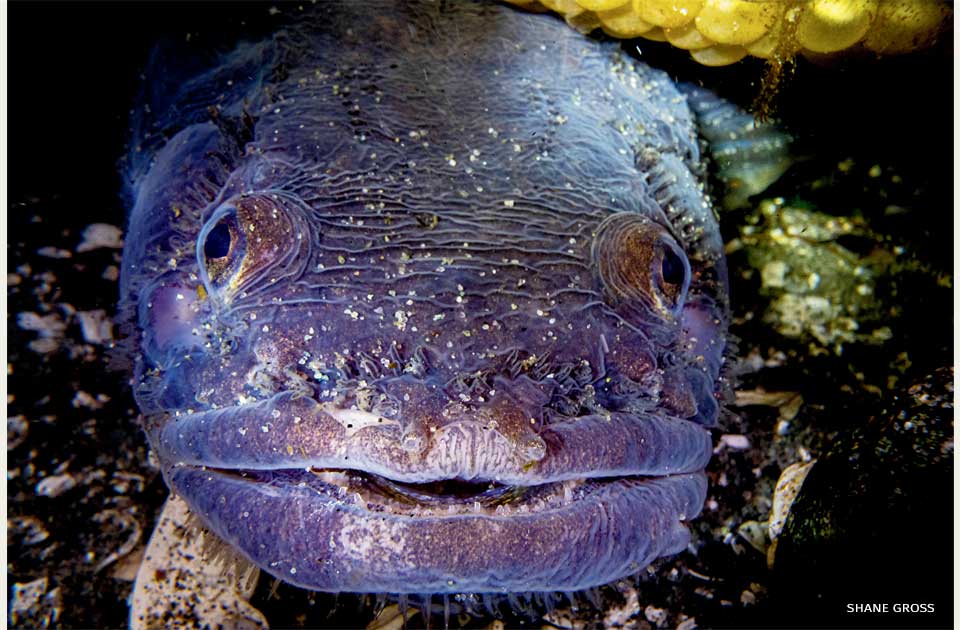
Balshine also has studied why plainfin midshipman produce two types of males. “We have large singing males called guarders that court females, build nests, provide parental care for young and are basically good dads,” she says (pictured). “Then there are also these males, called sneaker males, that swim right into the nest, drop their sperm and swim out to sea. Why has evolution made two types of males in this fish species? That was the burning question I had that I am still trying to figure out.”


