Pests No More: Rehabilitating Garden Critters’ Reputations
Pests, schmests. From snakes to bats to wasps, some of our most feared backyard wildlife help support healthy garden habitats.
- By Kathy Jesse
- Habitat Gardening
- Sep 24, 2025
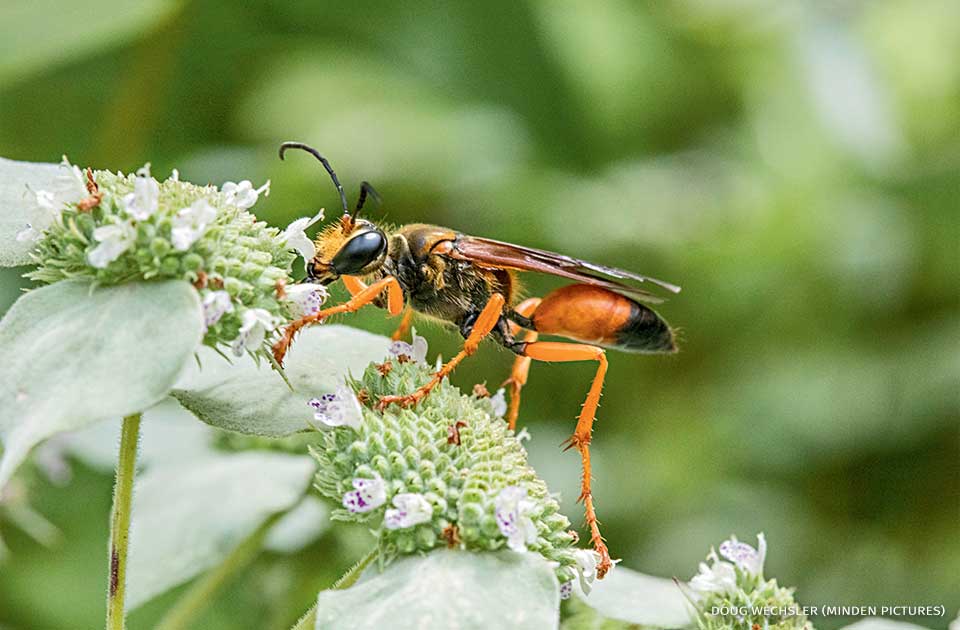
Wasps (great golden digger wasp, above) and snakes (common garter snake, below) prey on potential garden ravagers such as plant-munching insects and slugs. Bats also feed on herbivores as well as enormous numbers of biting mosquitoes. You can attract bats by buying or building a bat box (bottom).
DAVID MIZEJEWSKI CALLS THEM “THE UNLOVABLES”: snakes, bats, spiders and other creatures that make many of us shudder. But Mizejewski, naturalist for the National Wildlife Federation, says all these animals play key roles in backyard ecosystems. “If you see them in your yard, you’re doing it right.”
Some unlovables specialize in eating rats and mice. Others perform environmental cleanup by scavenging on dead animals. Many—even the hated yellow jacket—serve as pollinators for plants, including the plants we like to eat. And beneficial predators such as spiders are themselves important nesting-season food for songbirds. “If you want birds, you want spiders,” Mizejewski says. Here are a few other backyard animals you may want to welcome to your garden after all.
Snakes
A common cultural prejudice tells us “the only good snake is a dead snake,” Mizejewski says. “Frankly, that’s an ignorant thing to say.” Snakes that might find their way into your yard, including rat snakes, will prey on rats, moles, voles and mice you’d prefer not to see in your home or garden. Like spiders, they’re also food for more-popular wildlife such as foxes, barred owls and red-shouldered hawks.
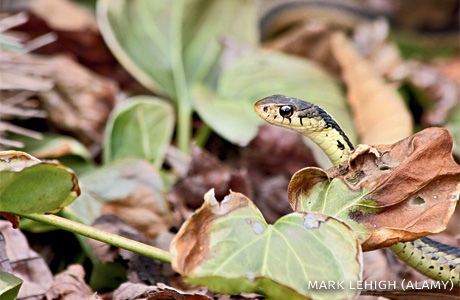
“Almost all snake species are 100 percent harmless to people,” Mizejewski says. “They will never chase you or try to eat you, including venomous species. They will do everything in their power to get away from you.”
To attract snakes to your backyard habitat, he recommends building brush and rock piles toward the edges of the property. To keep the reptiles from getting into your house, seal off crevices in your attic and basement with caulk. Keep screens in windows and keep dense vegetation, along with brush and rock piles, away from the home’s foundation.
If a nonvenomous snake does find its way into your house, the nonprofit Humane World for Animals suggests you open a nearby door and gently coax the animal toward the door with a broom. If that doesn’t work, slowly place a bucket over the snake and put a weight on top. Then call a professional wildlife removal specialist. For venomous species, call a professional immediately.
Bats
Many people find bats to be creepy, too, but Mizejewski says the animals are “super cool.” Not only do some species, including the little brown bat, feed on agricultural pests such as the corn earworm, they provide a “massive ecological service” by eating a prodigious number of biting mosquitoes. According to the nonprofit Bat Conservation International, a single little brown bat can consume 600 or more mosquitoes in an hour.
“Without bats, we’d be in real trouble,” Mizejewski says. It’s true that bats can carry rabies, as can many mammals. “But it’s a myth they chase people,” he says. “They won’t get tangled in your hair.” And while vampire bats exist, they don’t live in this country and rarely feed on humans.
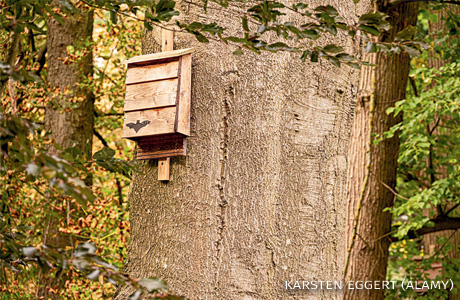
To keep bats out of your attic—which certainly can happen, especially during the reproductive season—close off access points with caulk, sealant or mesh. Then, invite these beneficial critters into your yard by mounting a bat box at least 12 feet off the ground and near a water source. A multichambered bat box encourages roosting of maternal colonies: groups of pregnant females that gather together to give birth and raise their pups until the youngsters are strong enough to fly.
The best bat houses mimic the spaces between tree trunks and bark, creating tight spaces, a rough inside texture to get a good foothold and caulking for warmth. See tips on building and installing a bat house on your property.
Wasps
Like their cousins the bees, wasps are important pollinators, visiting more than 960 plant species, including 164 that depend on them to reproduce. They also help defend these plants from the hungry hordes. Whether predatory or parasitic, wasps target a wide range of plant-devouring insects and other arthropods, including aphids, whiteflies, cabbage loopers and brown marmorated stink bugs.
Unlike much-beloved bees, however, wasps are widely loathed and feared, because some may sting aggressively if provoked. But aggressive wasps represent only a handful of social species—such as paper wasps, hornets and yellow jackets—that defend communal nests, says Karen Goodell, professor of evolution, ecology and organismal biology at The Ohio State University at Newark. The majority of wasp species are solitary.
If you get too close to a social wasp colony, the insects indeed may attack. Still, it’s not always necessary to take action, Goodell says. “If they’re by the front door, you may want to destroy them. But if they’re at the back of your property, you might want to just let them be.”
To prevent unwanted wasp encounters, author and biologist Heather Holm suggests surveying your yard in spring when colonies are small. Intervene—by closing a hole that ground-nesting yellow jackets are starting to use, for example—if a nest is in an area you cannot avoid. Because yellow jackets become more aggressive in fall, when their food sources become scarce, keep them at bay by covering sugary drinks when eating outside and securing the lids on garbage cans.
Holm, Goodell and Mizejewski agree that the best way to attract wasps and other unheralded beneficial species is to plant a native landscape. (For tips, see NWF’s Native Plant Finder™.) Bat houses and brush and rock piles do indeed provide places for animals to live and raise their young. A water source also is important. But a healthy backyard habitat, like any ecosystem, is a food web, Mizejewski says, “and native plants are the foundation of all food webs.”
Kathy Jesse is a writer based in Bethesda, Maryland.
More from National Wildlife magazine and the National Wildlife Federation:
Reconsidering Wasps »
How to Make Backyard Bats Feel at Home »
Snakes in Your Yard May Be Helpful to Plants »


