Reconnecting the Landscape for Wildlife
For tens of thousands of years, pronghorn, elk, deer and other species roamed the American West freely. These massive migrations involved millions of animals across hundreds of miles, unobstructed by human-made barriers or boundaries. But in the last 200 years, this has changed.
The Problem with Fences
Human development has created a vast network of fences across once open lands, blocking movement and threatening populations of the wildlife that define the West. Fences pose barriers to migratory wildlife, preventing access to important habitat—for food, for reproduction and for safety—and contributing to mass die-offs. Fences have direct effects on wildlife, causing injury and entrapment. It is estimated that there are more than 620,000 miles of fencing across the West, and in studies of western rangelands, researchers estimate that every year, one deer, elk, or pronghorn is killed from entrapment for every 2.5 miles of fencing. Pronghorn, in particular, are most affected by fencing due to their poor ability to leap over barriers. In Southwest Montana, over 20,000 miles of fencing in two counties alone overlap critical pronghorn habitat.
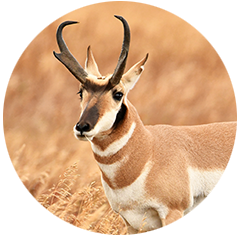

Pronghorn
Fast Facts
- Pronghorn are unique because they are the only living member of their family (Antilocapridae) and are the fastest land mammal in the Americas, having evolved on the vast open grasslands of North America.
- Pronghorn are renowned for their wonderful fleetness, traveling at speeds of up to 60 miles per hour.
- Pronghorn also have the longest land migration route in the continental U.S.
- Like many other species of the Great Plains, the pronghorn was hunted to near extinction by the end of the 1800s. Today the species’ numbers have revived, but the threats have also become more complex and far-reaching.
NWF is working with partners to reconnect and restore the pronghorns’ ancient routes. This video illustrates the challenges the pronghorn still face.
Our Work, Our Impact
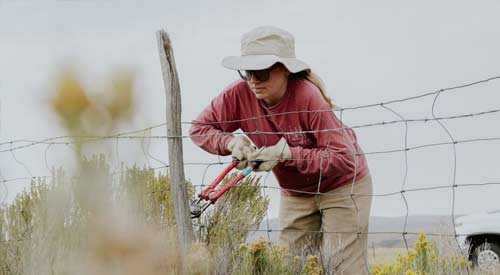
The Federation’s Northern Rockies, Prairies, and Pacific region coordinates projects to replace old fences with “wildlife-friendlier” fences and remove fencing where it is no longer needed. This allows wildlife populations to move more freely across the landscape and find food, shelter and safety. We take a collaborative approach that engages state and federal resource agencies, landowners, community groups, and other conservation non-profits. We rely on wildlife tracking data to determine where to focus our efforts. We engage in outreach and education in local communities to build support for on-the-ground projects.
Mile by mile, we can make a difference. This video illustrates the impact wildlife-friendly fencing can have on pronghorn migration.
Our Work Since 2021

Miles of fencing removed or replaced

Volunteers

Number of family-owned ranches we have collaborated with
Our focus areas include:
- The High Divide region of southwest Montana
- Greater Yellowstone Ecosystem of southwest Montana

Volunteer with Us
Let’s Keep Wildlife on the Move
Volunteers—of all ages—drive our impact. Come out and join us in the field. Together, we can keep wildlife on the move.