Program Impact

During the 2025-2026 school year, thousands of students took collaborative, community-based action. Fueled by hope and determination, they championed bold solutions, safeguarding wildlife, revitalizing ecosystems, tackling climate challenges, and nurturing healthier, more connected communities.

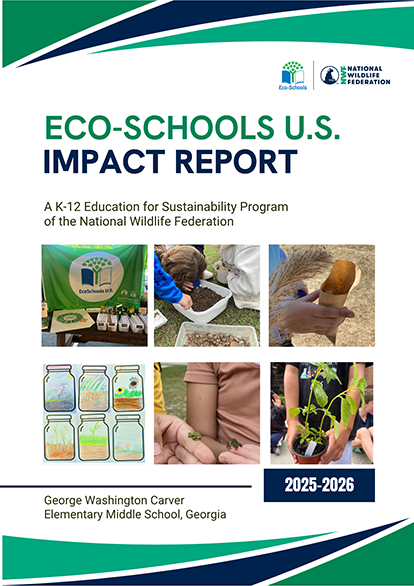
Eco-Schools U.S. Impact Report Cover 2025-2026

The Eco-Schools U.S. program is a driving force for student-led environmental learning and action across the country.

Engage with and be inspired by the collective impact and stories from school communities across the country.
Read the Report

Collective Action Adds Up!

1 These values reflect data collected since the re-launch of Eco-Schools U.S. in 2023.

4,790

Actions Taken

276K

Students Reached

4.9M

Trash Collected (lbs)

1.9M

Habitat Created (sqft)

113K

Native Trees
and Plants

37K

Hours of Outdoor Learning

Eco-Schools U.S. Bronze Certification seal with the number 34 next to it
Eco-Schools U.S. Silver Certification seal with the number 58 next to it
Eco-Schools U.S. Gold Certification seal with the number 56 next to it
Eco-Schools U.S. Green Flag Certification seal with the number 320 next to it

Good Things Are Happening at Eco-Schools Around the Country!

Chilton Bobcats logo over aerial view of landscape; small map of California

Barbara Chilton Middle School, Roseville City Elementary School District, CA

Students took food waste straight to the source, writing letters to over 70 local restaurants they chose themselves. Each letter explained how food waste fuels climate change and offered a free, profitable fix: the Too Good To Go app. It's a powerful example of young people turning research into real community outreach.

Tenakill Middle School logo with small map of New Jersey

Tenakill Middle School, Closter Public Schools, NJ

Seventh and eighth graders became community advocates, researching pressing issues like toxic algae blooms, deforestation, and air pollution. They identified local decision-makers and mailed evidence-based letters demanding accountability. Several officials wrote back, proving to students that their voices carry real weight in shaping public discourse and policy.

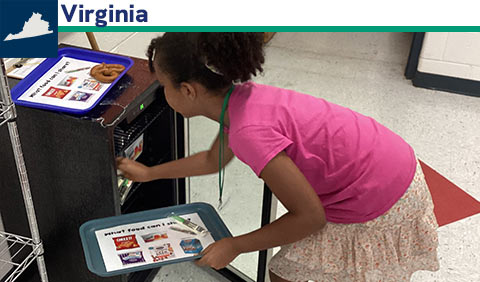
Student holding tray and reaching into small refrigerator; small map of Virginia

Laurel Hill Elementary School, Fairfax County Public Schools, VA

A student-led food share program grew from a small tray system into a school-wide movement. After tracking results, leaders added a refrigerator to rescue perishables like milk and yogurt, not just shelf-stable snacks. Now self-sustained by students, the program is expanding its focus toward mindful consumption and reducing waste at the source.

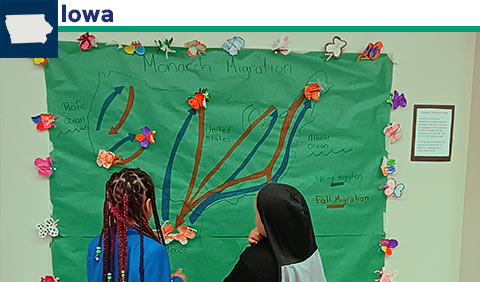
Students studying monarch migration poster; small map of Iowa

Cedar River Academy, Cedar Rapids Community School District, IA

Second grade EcoLeaders turned a science lesson on Monarch Butterflies into civic action, speaking to 220 classmates and the Mayor Pro Tempore at an Earth Day Assembly. Inspired by the city's post-derecho tree restoration efforts, students are now rebuilding their certified Monarch Waystation and preparing to track butterflies in their garden.

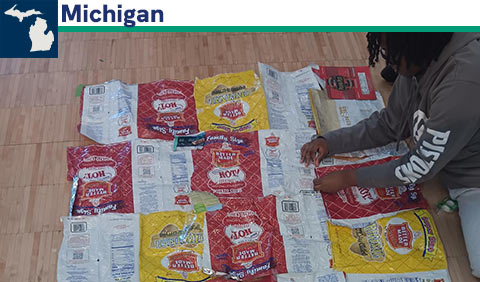
Student working on creating insulated sleeping mat out of chip bags and wrappers; small map of Michigan

The School at Marygrove, Detroit Public Schools Community District, MI

Partnering with area youth and the Chip Bag Project, students spent February collecting chip bags, wrappers, and other Mylar materials destined for landfills. These were transformed into insulated sleeping mats for people experiencing homelessness, each paired with a hotel voucher and connection to further services, turning everyday waste into life-saving aid.

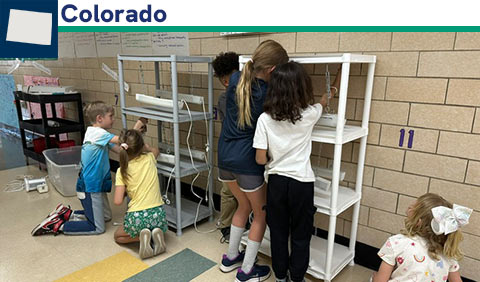
Students working together at carts with grow lights; small map of Colorado

Cory Elementary School, Denver Public Schools, CO

Students in grades one through five grow, harvest, and cook their own organic food across a five-year journey. This year's new Cory Culinary Program brought the Charlie Cart into classrooms, where students read recipes, measured ingredients, and tasted garden-grown dishes, linking environmental stewardship directly to hands-on learning and personal wellness.